Casuarina equisetifolia
Casuarina, whistling pine
Description
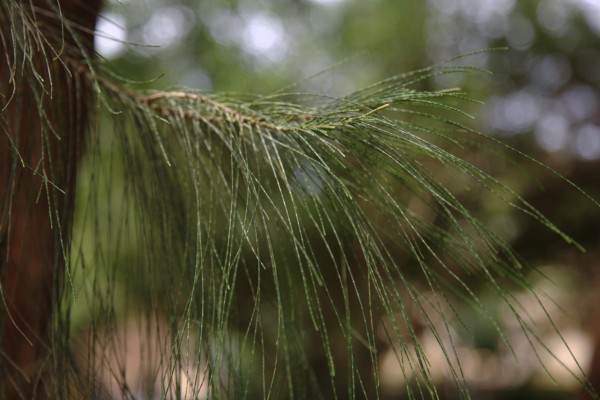
A tree to 20 m with "weeping" foliage (branchlets).
BARK: grey-black cracked with age, peeling off in strips.
LEAVES: minute scales just visible on the green branchlets, branchlets to 30 cm hang down in crowded tufts.
FLOWERS: pollen- bearing tips on some branchlets; female flowers in tiny heads with red stigmas .
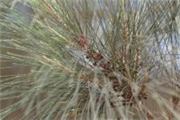
FRUIT: woody and prickly, brown, like "cones", in clusters, to 2.5 cm long, releasing hundreds of tiny winged seeds.
Uses
Medicine: roots, twigs, cambium layer beneath the bark and the bark. http://tropical.theferns.info/viewtropical.php id=Casuarina+equisetifolia
Agroforestry: the tree is used to control erosion along coastlines, estuaries, riverbanks and waterways, fixes atmospheric nitrogen, suited for boundary planting, provides fodder to the animals, provides mulch, used in soil conservation.
The bark contains tannins that are used for preserving ropes etc., and also contains a red pigment that can be used as a dye.
Provides wood that is used for house posts, rafters, electric poles, tool handles, oars, wagon wheels and mine props.
The wood is used to produce paper pulp using neutral sulphate and semi-chemical processes, and as a raw material for rayon fibers.
The tree is a source of firewood and produces high-quality charcoal.T
he wood provides timber.
An ornamental tree.
The tree provides shade.
Ecology
Native to Asia and the Pacific from North and North East Australia to India and Sri Lanka, including Malaysia and Indonesia. The range has been extended by man to India, tropical and subtropical America and Africa. In Uganda it does well in the Rift Valley areas and where the climate is dry but with adequate soil moisture in the ground. It is often planted in homesteads as an avenue tree. It does best in loose sandy soils provided there is subsoil moisture, but it will not withstand waterlogging, although it can tolerate some salinity. The extensive root system and nitrogen fixing root nodules enable the tree to grow in poor soils. It is common along the coast of East Africa. In Kampala, Whisling pine is found along Corydon road, Nakasero hill road, speke road, within national housing and medical quarters among others.
Management
Fast growing; side pruning to get a clear bole, pollarding, coppices while young.
Tree gallery

.jpg)
.jpg)
.JPG)