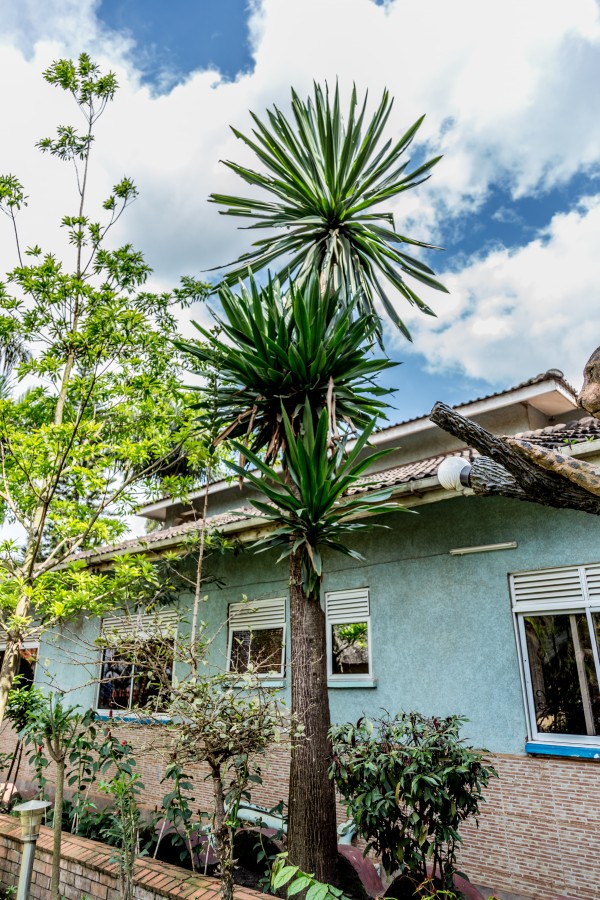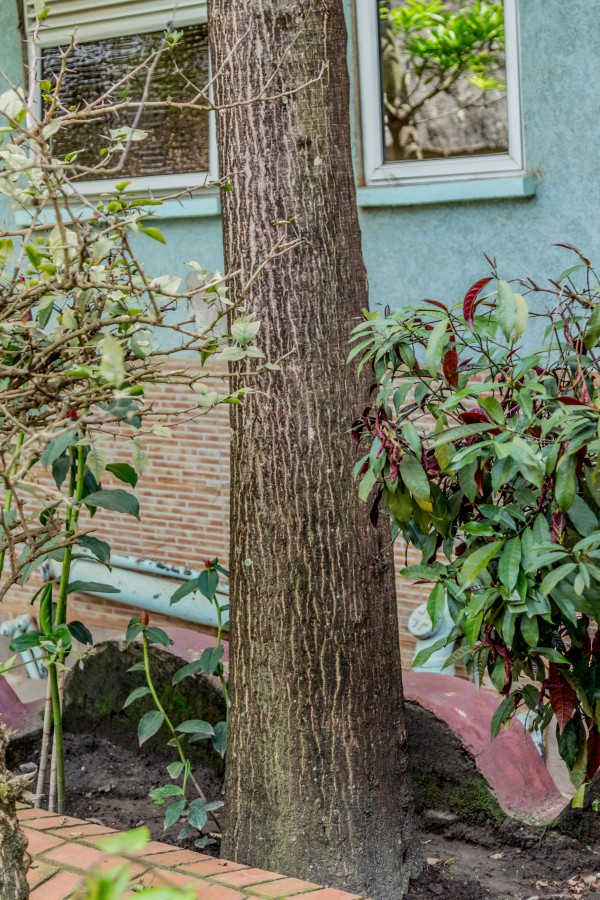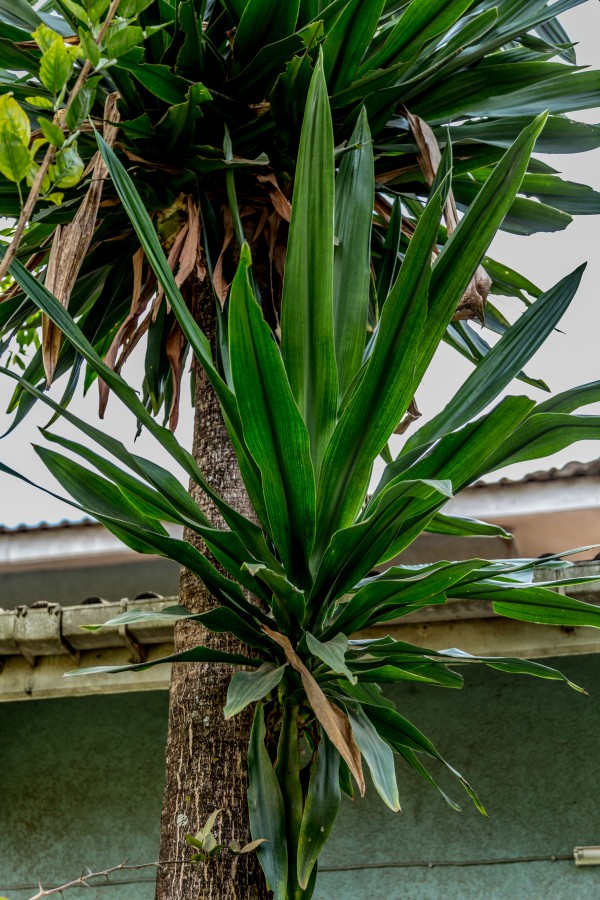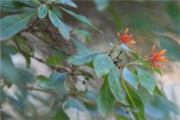

Dracaena steudneri
Steudner's dragon tree
Kwamba: Kagorogoro Luganda:Kajolyanjovu Lugishu: Gushompo Lugwe: Luwano Runyankore:Mugorogoro Runyoro: Mukyora Rutoro: Ngorogoro Sebei:Molalosti.
Description
An evergreen tree, usually 15 m but up to 18 m. The trunk often branches from the base with large branches rising steeply. Near the ground the base may be swollen.
BARK: smooth, grey-red brown, with horizontal leaf scars.
LEAVES: dark shiny green crowding the tips of branches like palms, the leaves over 1 m long and 12 cm wide, strongly fibrous, with no clear veins but the centre thickened, the edge wavy.
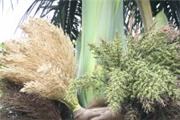
FLOWERS: pale white yellow-green, 6 narrow petals joined in a tube about 1 cm long, petal lobes as long as the tube. Flowers in tight clusters all over a big flowering head about 1 m high.
FRUIT: small rounded green berries, becoming red then black and juicy, about 1 cm across; eaten by birds. The angular branchlets remain for some time and turn orange.
Uses
An ornamental tree.
Leaves sometimes used as wrapping material.
Leaves, bark and roots are used in minor medicine.
Provides poles and timber.
The tree is used for ceremonials (used for formal religious or public events).
Ecology
Steudner's dragon tree is indigenous to Uganda. A dragon tree distributed from East to Southern Africa in moist or drier forest, often at higher altitudes. It was named after a German botanist who collected the tree in forests in the Sudan. In Uganda it grows in moist highland forests, often in gaps, along river banks or in gallery forests. Common in the Lake Victoria forest belt. In Kampala, this tree can be found within Makerere university, along Owen road among other places.
Management
Fast growing. Little or no management required once established. Cuttings root easily.
Tree gallery