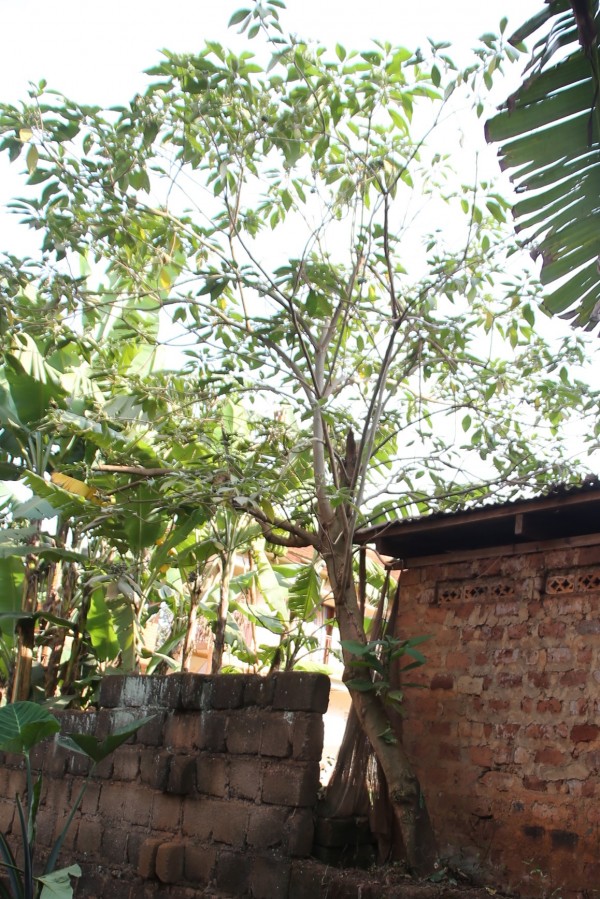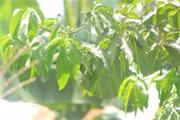

Solanum mauritianum
Bugweed, bug berry, bug tree, bug-tree, ear-leaf nightshade, flannel leaf, kerosene plant, tobacco bush, tobacco weed, tree tobacco, wild tobacco, wild tobacco bush, wild tobacco plant, wild tobacco tree, woolly nightshade
Description
Bugweed is a large shrub or small tree usually growing 1.5-4 m tall but sometimes up to 10 m. It has a life of up to thirty years.
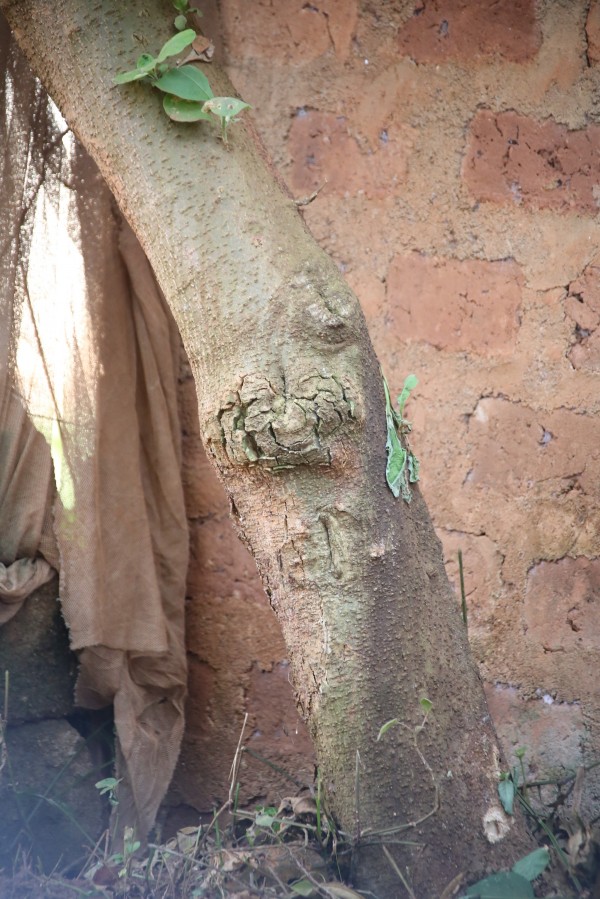
BARK: spineless and all parts (except older stems) are densely pubescent with sessile to long-stalked stellate hairs (trichomes), which are loose and floccose on young growth.
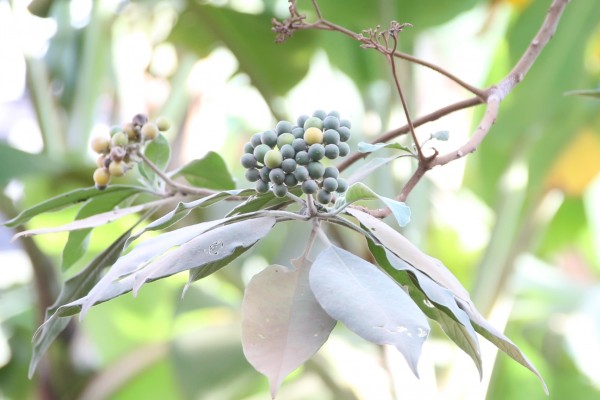
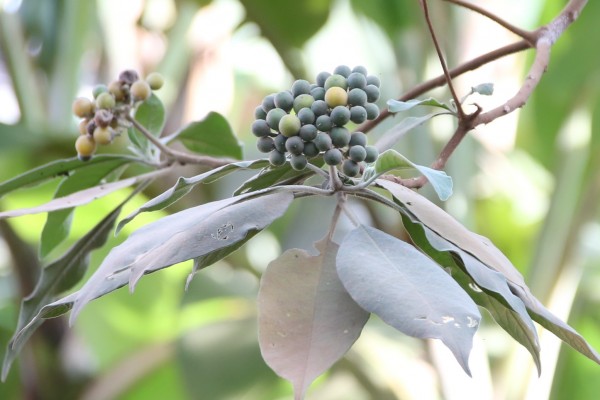
LEAVES: large, simple, alternate, elliptic, oval, grey-green in color and covered with felt-like hairs and leaf margin is entire, the apex acuminate and the base cuneate and often oblique. One or two ear-shaped leafy structures are usually present at the base of the leaf stalks. The petioles are 30-90 mm long, each with 1-2 smaller auriculate leaves in the axils.
FLOWER: purple with a yellow center are produced in dense branched clusters.
FRUIT: succulent, green ripening to yellow globular berries (10-15 mm across). Seeds numerous, flattened, 1.5-2mm long, testa minutely reticulate. Self-compatible.
Ecology
Bugweed is native to South America (Brazil, Uruguay and northern Argentina). It is naturalized in Australia, southern Europe, tropical and southern Africa, southern USA and in many oceanic islands with warm climates. Its habitat is Agricultural areas, coastland, natural forests, planted forests, forest margins, riparian zones (banks of watercourses), ruderal/disturbed, urban open spaces. It is tolerant of many soil types. . In Kampala, Bugweed can be found along Upper Kololo terrace, York terrace, within Makerere University among other places.
Tree gallery