Rothmannia urcelliformis (Randia urcelliformis)
Forest rothmania, Mutamba webungu
Rutoro: Munyaburo.
Description
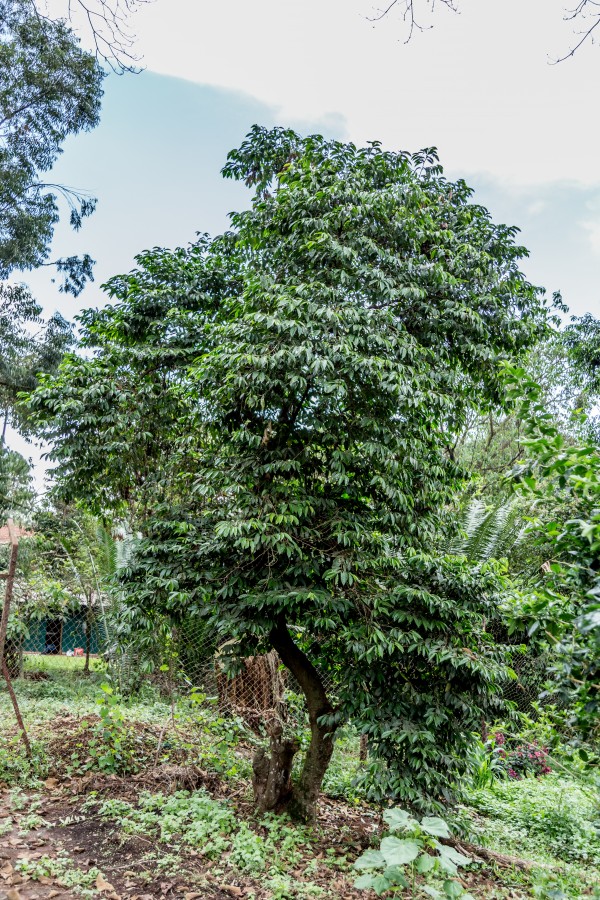
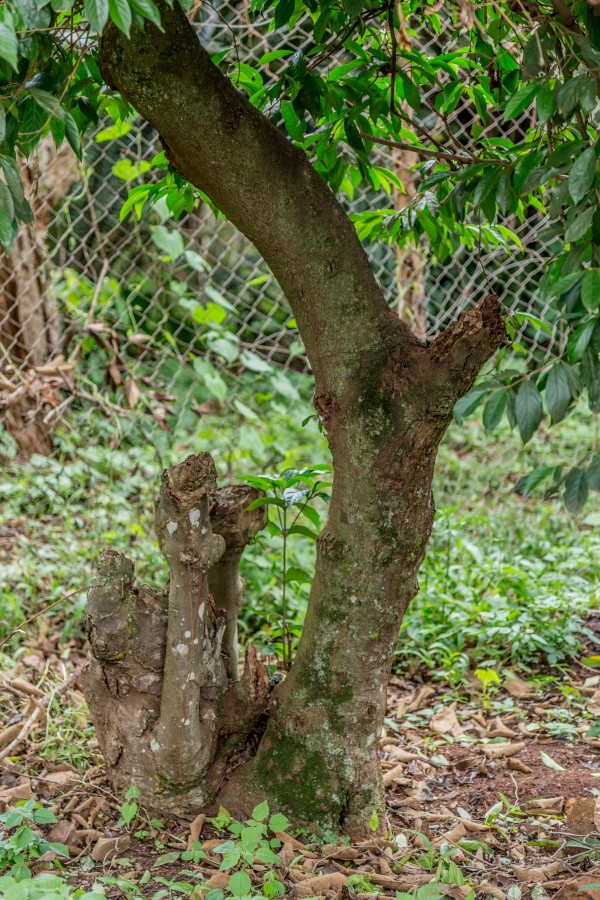
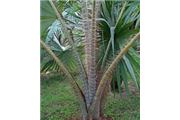
A shapely evergreen tree or shrub 2-10 m with a thin trunk, often leaning, and with low sweeping branches. Branches tend to be at right angles to the trunk.
BARK: smooth, grey-brown, rough and slightly scaly with age, branchlets covered with hairs.
LEAVES: opposite or in threes , broadly oval to 7-12 cm long, lime green when young, later dark and shiny, tip long pointed , base horizontal, 5-8 main veins each side, surface wavy. Long thin stipules fall early.
FLOWERS: solitary, upright, fragrant and trumpet shaped with 5 petals and overlapping to the right in the bud, the flower 6-8 cm high, the pointed petals 12-45 mm, yellow-white with purple-red markings in the throat , calyx tube hairy outside and split into thread-like lobes.
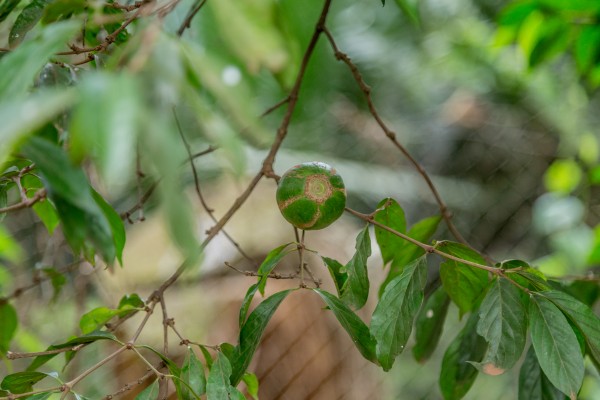
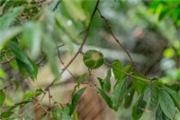
FRUIT: an erect berry, egg shaped to 6 cm , slightly ridged, green at first and then brown-black and hard, persistent on the tree.
Uses
Provides firewood and charcoal.
The tree provides poles.
An ornamental tree.
Ecology
Native to Uganda. A common shrubby tree in moist or dry forest, often near rivers, extending to South Africa. In Uganda it is part of the forest understorey and quite widely distributed, especially in Kibale Forest. It is said to be common on Mt. Kadam. In Kampala, this tree can be found in Makerere University.
Management
Fast growing. coppicing and pollarding.
Tree gallery