
Eucalyptus grandis
Flooded gum, rose gum
Luganda:Kalitunsi.
Description
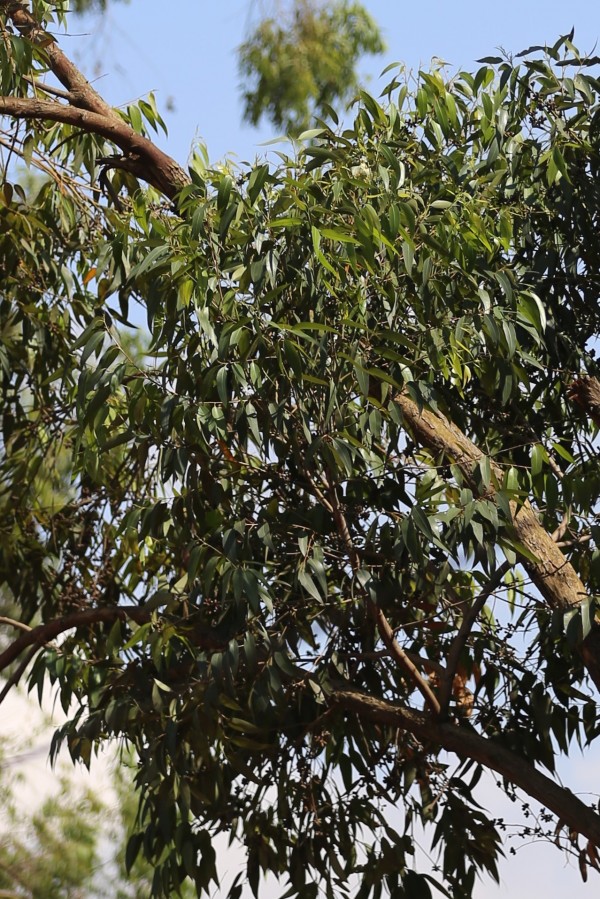
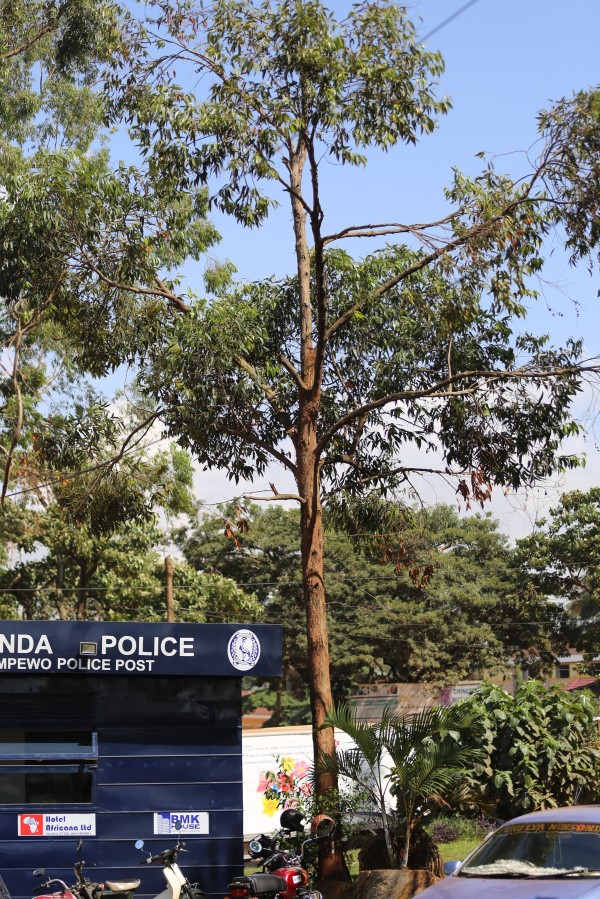
An evergreen tree 40-55 m, to a diameter of 2 m; with an excellent straight trunk and wide spreading thin crown, selfpruning of branches in plantations.
BARK: reddish at first, later pale grey, fibrous bark extends several meters up the trunk (more than in E. saligna ). Upper bark is smooth, silvery white (greenish).
LEAVES: juvenile leaves are petiolate, opposite for several pairs then alternate, ovate up to 16 x 8.5 cm, green to dark green and slightly wavy; adult leaves are petiolate, alternate, stalked, lanceolate to broad lanceolate, up to 15 x 3 cm, green on topside and pale green on underside, slightly wavy, with a long point.
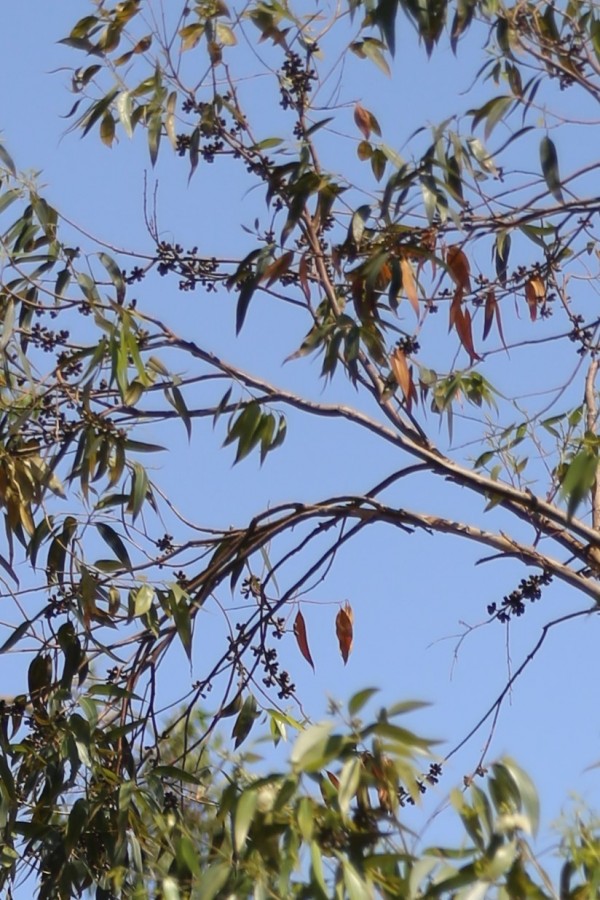
FLOWERS: white, small. Buds (larger than in E. saligna ) with a bluish bloom (waxy powder).
FRUIT: pear-shaped, gradually narrowed to an ill-defined stalk, teeth of capsule 4-6, mostly 5, pale, the blunt tips turned inward like "clutching fingers".
Uses
Medicine: ground branch tips, and leaves. http://tropical.theferns.info/viewtropical.php id=Eucalyptus+grandis
The leaves yield 0.3 - 4.7% essential oil that has larvicidal activity against the mosquito Aedes aegypti, with alpha-pinene being the principal larvicidal component.
The wood can be used for fence posts, building, transmission and telephone poles, boxes and hooks.
The wood is a source of timber which can be used for boat building, flooring, plywood, panelling and general construction. It has been used as a source of pulp for making paper.
Provides fuel wood and for charcoal, and iron smelting.
The firewood is used for domestic purposes and for curing tobacco.
Agroforestry:planted in windbreaks, can be intercropped with crops like maize and sorghum, used in apiculture (useful as a bee forage).
An ornamental and shade tree.
Ecology
Flooded gum is native to Australia. This gum tree grows best in humid subtropical conditions, but has been widely planted all over the world (e.g. South Africa, Brazil). In Uganda it has attained maximum growth in Kabale, Kisoro and Rukungiri Districts. It has also been naturalized. It performs best on light and medium neutral-to-acid soils that are free draining and moist, 1,600-2,300 m. In Kampala, Flooded gum can be found at Children's park Kamwokya, within Makerere university, Uganda Golf course club, along Buganda road among other places.
Management
A fast-growing tree. Coppicing. Protect from
termite attack when young.
Tree gallery
.jpg)