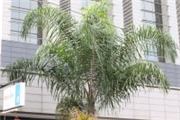

Albizia lebbeck
Siris tree, woman's tongue, East Indian walnut, Acacia, amarilla, Fry wood, Lebbeck, Indian siris
Description
tTT Siris tree is a deciduous tree 8-14 m, but may reach 25 m. The trunk is often short, crown spreading and fairly dense. The straight, cylindrical bole can be 50 - 100cm in diameter, with exceptional specimens to 300cm.
BARK: grey-violet with rusty brown breathing pores, rough and fissured.
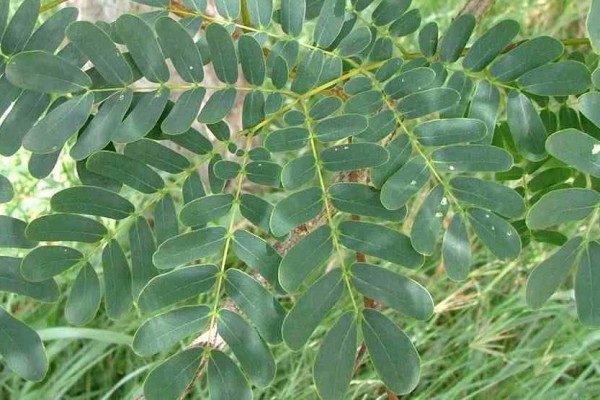
LEAVES: bipinnate feathery with 3-11 pairs of leaflets, tip rounded, usually 2-3 cm.
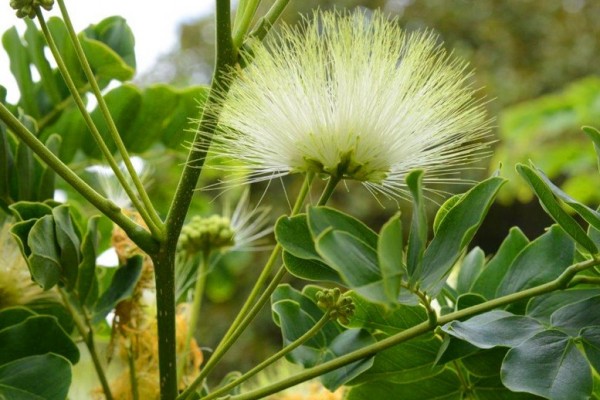
FLOWERS: numerous cream-yellow-pink, half spherical, about 2-5 cm across, stalked, lasting only a few days; filaments greenish-yellow, white below; each flower with a small stalk.
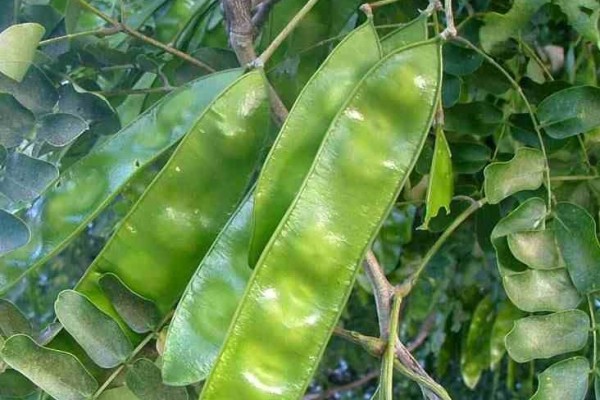
FRUIT : shiny yellow-brown pods in clusters, decorate the tree a long time, each pod 20-30 cm long, bulging over a few seeds, the seeds and pods "chatter" in the wind.
Uses
Medicine: leaves, seeds, bark, flower, saponin from the pods and roots. http://tropical.theferns.info/viewtropical.php id=Albizia+lebbeck
Agroforestry: fixes atmospheric nitrogen, it's a pioneer species when establishing woodland or woodland gardens, good soil binder and is recommended for eroded lands and erosion control, leaves are valuable as mulch and green manure, can be used in rehabilitating old cocoa farms or on improved fallows intended for cocoa cultivation due to its nitrogen-fixing abilities, leaves, flowers, and pods provide fodder to the animals, can be planted as a wind break, can be used in apiculture.
The bark contains 7 - 11% tannin and is used locally in India for tanning fishing nets.
When dried and pounded, the bark can be used for soap.
A red dye is obtained from the bark.
The wood provides timber which is suitable for turnery, carving, general construction, furniture, veneer, agricultural implements etc.
The wood is a source of fuel wood and makes an excellent charcoal.
The trunk yields a reddish gum that is used as an adulterant of gum Arabic.
The fruits can yield 10 barrels of ethanol per hectare per year.
An ornamental tree.
Provides poles and posts.
Ecology
Siris tree is native to Tropical Africa, Asia and Northern Australia. It has been widely introduced into all other Tropical regions, becoming naturalized in many, and much of the subtropical zone. Although it prefers black cotton soil, as the roots are near the surface and require a high water table, it will grow on a wide range of soils, acid, alkaline and saline, 900-1,500 m. In Uganda it is grown around the salt lakes in Kasese District. In Kampala, Siris tree can be found at Lower Kololo terrace among other places.
Management
Fast growing on good sites; lopping, pollarding, coppicing, pruning. Protect from browsing animals.
Tree gallery