Dypsis decaryi
Triangle palm, three ranked palm, triangular palm, three cornered palm, three sided palm
Description
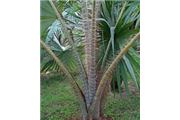
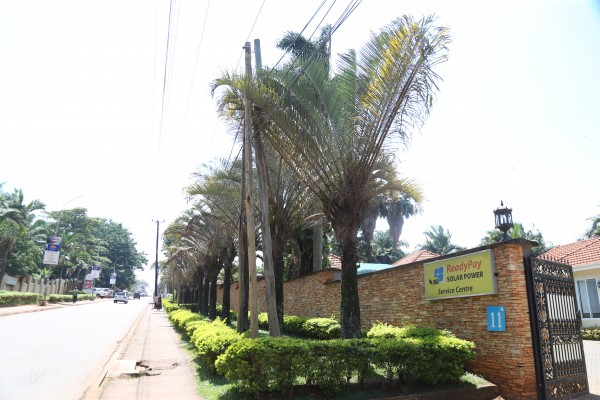
Triangle palm can reach heights of 25 to 35 feet with a crown spread of 15 feet. It can have a diameter of 30-40 cm. The pinnately compound leaves or fronds can grow to 10 feet long, with the upper half of the leaf hanging or drooping. The bottom portion of the frond (leaf petiole) is only 1-foot-long and forms a cupped, triangular shape. Fronds grow from the top portion of the trunk in three distinct rows, creating the shape of a triangle as petioles stack on top of one another.
BARK: trunk solitary, round, internodes 3-10 cm, brownish-grey, prominently ringed with old leaf scars.
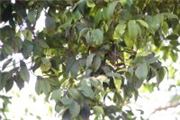
LEAVES: pinnate, bluish-green to silvery-green, tristichously (arranged in three rows or ranks), stiff, arching almost upright (normally no more than 45-degree angle), drooping only at the tips, up to 3 m long; leaflets narrow, especially on the lower leaflets (lower leaflets are developed into long having threads, known as reins, which drape to the ground); have entire or smooth margins, and form a "V" shape as they sit opposite to one another on the rachis, petioles brown, covered with a whitish wax, growing on three sides of the trunk, forming a triangle. The leaf bases are arranged in three vertical columns set about 120 degrees apart on the main stem, forming a triangular shape in cross section.
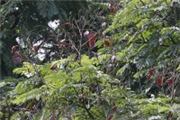
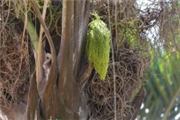
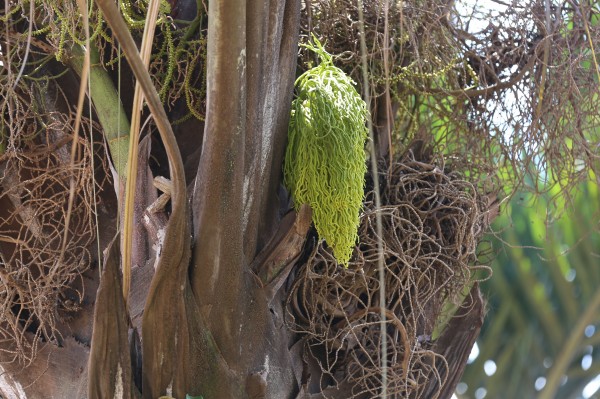
FLOWERS: moderately-branched, yellow to green, about 1.2 m long, arising from the lower fronds.
FRUIT: ovoid, about 2.5 cm in diameter, green when immature, yellowish-white when ripe and red when mature.
Uses
Ornamental plant.
Leaves are used locally for thatching.
Ecology
Triangle palm is indigenous to the Madagascan rainforest and it thrives in poor, dry soils. In the United States, triangle palm is found in southern Florida, southern Texas, and the Hawaiian Islands. In suitable climates it blooms all year. It prefers full sun and regular watering, although it is not vulnerable to occasional dryness and partial shade. The palm is best suited to sandy soil and it tends to do poorly in clayey soil or in rainy climates such as in Hawaii. In Kampala, Triangle palm can be found at Kitante courts, Prince Charles drive, Wampewo avenue among other places.
Management
Triangle palm is a moderately fast-growing, drought tolerant, medium-sized palm whereby over-watering and poor drainage are far greater hazards than drought. It does not transplant well, so it is a bad choice for commercial field growing. This palm is naturally resistant to pests but may require regular fertilization to prevent yellowing caused by potassium deficiencies.
Tree gallery
.jpg)
.jpg)
.jpg)