
Coffea liberica
Liberian Coffee, Excelsa coffee, Liberica coffee
Description
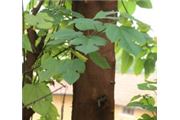
Liberian coffee is an evergreen shrub or tree growing 5 - 20 meters tall.
BARK:
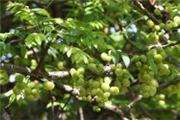
LEAVES: opposite; stipules interpetiolar, triangular-ovate to almost truncate, 2-4.5 mm long, obtuse or sometimes acute; petiole 0.8-2 cm long, leathery, elliptic, wavy leaf margin, leaf blade bulges between the veins, creating a wrinkled leaf texture.
FLOWERS: white, fragrant flowers are tubular and star-shaped. They are arranged in clusters near the branch tips.
FRUITS: cherry-like fruit (3-3.5 cm long, 1-1.5 cm wide) typically contain 2 seeds which are commonly referred to as beans. The cream-coloured to light brown seeds are oval with slightly pointed opposite ends.
Uses
Edible: the roasted, powdered seed is used to make the well-known drink coffee.
Medicine: the leaves. http://tropical.theferns.info/viewtropical.php id=Coffea+liberica
Seedlings are sometimes used as rootstocks for Arabica ( C. arabica ) and Robusta ( C. canephora ) plants.
Ecology
Liberica coffee is native to tropical West and Central Africa. It is found in lowland to lower montane rain forest, gallery forest, forest margins and even in open scrub vegetation, at elevations up to about 1300 meters. Long used by local people as the source of a stimulating drink, it is now cultivated in many tropical countries as a source of coffee although, because of its more bitter taste, the scale of production is far less than for C. Arabica. In Kampala, Liberica coffee can be found within Makerere university, Makerere II zone C among other places.
Tree gallery
.jpg)
.jpg)