
Casuarina cunninghamiana
River oak, River she-oak, Australianbeefwood, Australian pine, Beefwood, Casuarina, Coast beefwood, Creek oak, Cunninghamsbeefwood, Fire oak
Description
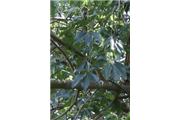
River she-oak is a long-lived, relatively fast-growing, evergreen tree growing 12 - 35 meters tall with a bole 30 - 150cm in diameter. Leaves on new shoots erect. Deciduous branchlets thin and soft and droop in various specimens.
BARK: finely fissured and scaly brown.
LEAVES: like teeth, less than 0.5 mm long, 6-8 in a ring at joints or nodes about 5 mm apart, on the main twigs to 3 mm long, curved back in rings close to 1.5 mm.
FLOWER: clusters inconspicuous, light brown. Male and female flowers borne on separate trees. Male flowers borne in terminal spikes, 0.4-4 cm long, less than 3 mm wide, at the tips of shoots and arranged in whorls with 11- 13 whorls per centimeter of spike; female flowers small, reddish and ovalshaped, 5 mm long.
FRUITS: cones small, subglobose, about 7-14 x 4-6 mm. The individual fruit is small, pale greyish, samara 3-4 mm long, often longer than broad.
Uses
An ornamental tree.
Agroforestry: good soil stabilizer, planted along the sides of streams to protect them from erosion, used in windbreaks, shelterbelts and for land reclamation, foliage produces an excellent mulch, young trees and the foliage are source of fodder to the animals, fixes nitrogen in the soil, can be intercropped with other crops.
The bark can be used as tanbark.
The wood can be used for flooring, axe handles, poles, ornamental turnery etc.
Can be used as fuelwood and for charcoal production.
Craft dyers can use the foliage to produce attractive colours in wool using different mordants.
Ecology
River oak is native to Australia. It is found mainly in the warm sub-humid climatic zone and is generally a dominant species in riverbank vegetation. It is restricted to river- and streambanks and adjacent valley flats, and may extend for a short distance up rocky hillsides above watercourses. In Kampala, this tree species is found within Uganda Golf course club, along Kira road, within Mukwenda zone among others.
Management
Relatively
fast-growing. Requires pruning, and pollarding.
Tree gallery

.jpg)