Antiaris toxicaria
Bark cloth tree, Antiaris, False iroko, False mvule, Upas tree, Sacking tree
Ateso: Eloa Kwamba: Kesuba, kisuba Luganda: Kirundu Lugishu: Lulundu Lugwe: Mulundulundu Lunyuli: Musende Luo A: Olivaa Luo L: Elwa Madi: Ripi Runyankore: Mumaka Rutoro: Muhere, mbondo.
Description
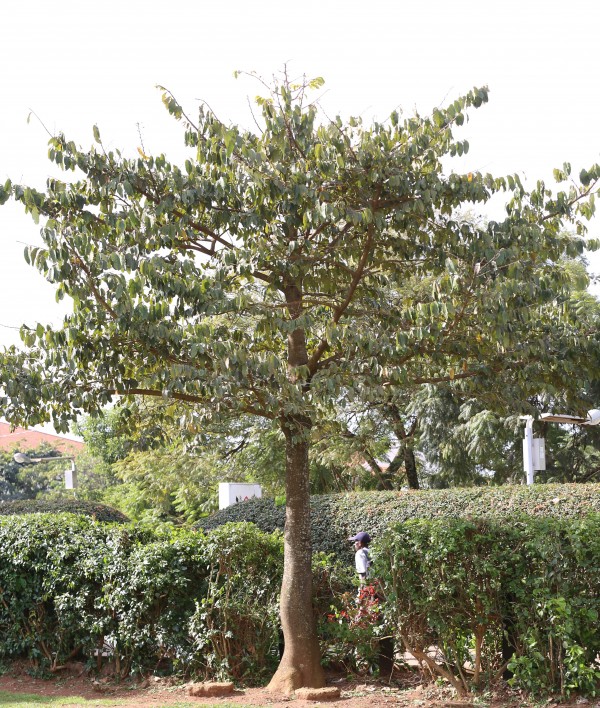
A deciduous tree of the forest canopy, often 20 m, up to 40 m, crown rounded, branchlets drooping. A large tree may have a tall clear bole with 150cm in diameter and some buttresses at the base.
BARK: smooth, pale grey, marked with lenticel dots and ring marks. When cut thin cream latex drips out, becoming darker.
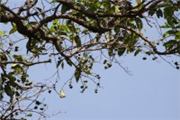
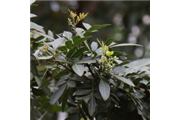
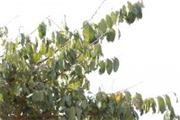
LEAVES: variable, usually oval 5-16 cm x 4-11 cm, the upper half often widest to a blunt or pointed tip, the base unequal and rounded. Saplings and coppice shoots have long narrow leaves, the edge toothed—but rare in mature leaves. Leaves are rough, papery with stiff hairs above but softer below.
FLOWERS: small male flowers, yellow-green, in clusters about 1.5 cm across, growing just below leaves. Female flowers in disc- or kidney shaped heads to 3 cm across.
FRUIT: bright red, dull and furry, 1.5 cm long, the swollen receptacle contains just one seed.
Uses
Medicine: latex, seeds, leaves, and bark. http://tropical.theferns.info/viewtropical.php id=Antiaris+toxicaria
The inner bark or fiber is used to make rough clothing, hammocks, sandals, hut walls, cordage, sacks, mats and paper. http://tropical.theferns.info/viewtropical.php id=Antiaris+toxicaria
A latex from the trunk is used medicinally and as a hunting poison.
The bark contains tannins and has been used for dyeing.
The wood is used for interior joinery, panelling, moulding, shuttering, furniture, strip flooring, boxes and crates, tool handles, toys, carvings, peeled and sliced veneer for interior and exterior parts of plywood, fibre and particle board, and block board, drum making and for light construction and canoes.
The wood from the roots is sometimes used as a cork substitute.
Agroforestry: used as a pioneer when restoring native woodland, leaves are fodder to the animals.
The tree can sometimes be planted as an ornamental tree.
Ecology
Antiaris is indigenous to Uganda. It's a forest tree with 3 varieties not clearly distinguished, especially when young. While one is found largely in wooded grassland, the others grow in rain forest, wetter forest, riverine and semi-swamp forests west to Sierra Leone, into southern Sudan and south to Zaire and Angola. It grows in all regions of Uganda except the North Eastern, 1,350-1,700 m. In Kampala, Antiaris can be found at Makerere university, Uganda Golf course club, Kasozi road, Mawanda road among other places.
Management
Fast growing attaining full size within 20 years.
Tree gallery
.JPG)
.JPG)