
Flacourtia indica
Madagascar plum,batoka plum,flacourtia,governor’s plum,Indian plum,Mauritius plum,
Lugishu: Singululrwe Luo L: Kokowi Runyankore: Muzhebazhebe Sebei: Tungururu.
Description
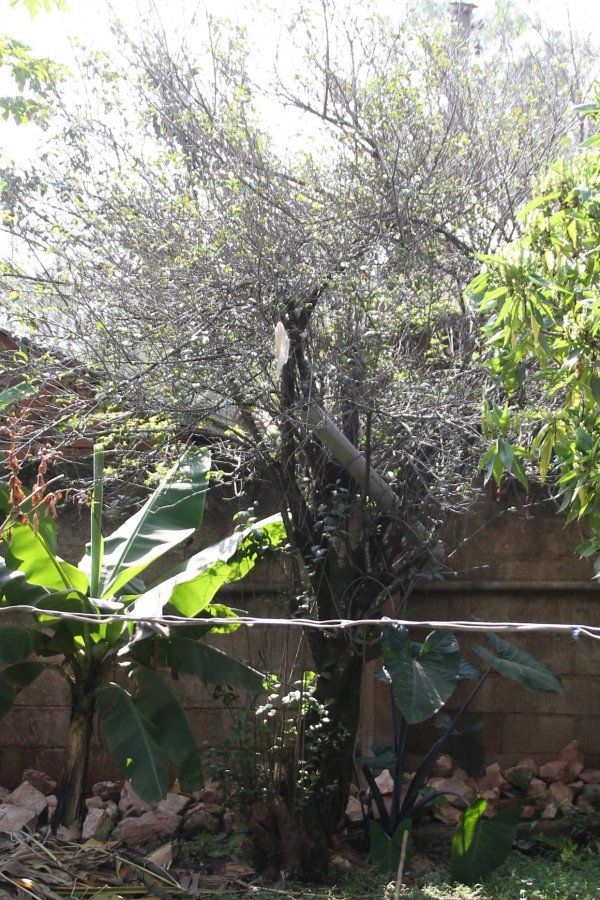
A deciduous spiny shrub or small tree, usually 3-5 m; spines on the trunk usually straight sometimes branched, up to 12 cm long but quite variable.
BARK: rough, pale yellow-grey, branches may have a yellow powder at first.
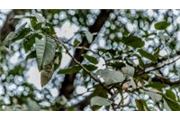
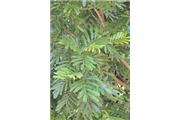
LEAVES: variable in size, oval, to 12 cm, edge toothed, 4-7 pairs veins clear on both surfaces, stalk to 2 cm.
small, cream, fragrant; male flowers with very many yellow stamens, female flowers with a divided spreading style.
FLOWERS: small, cream, fragrant; male flowers with very many yellow stamens, female flowers with a divided spreading style.
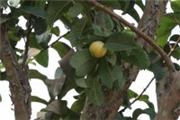
FRUIT: red-purple-black, round and juicy but acid, to 2.5 cm across, persisting on the tree. They contain up to 10 small seeds, hard and flat.
Uses
Edible: Fruit, young shoots. http://tropical.theferns.info/viewtropical.php id=Flacourtia+indica
Medicinal: Bark, leaves and root. http://tropical.theferns.info/viewtropical.php id=Flacourtia+indica
Agro-forestry uses: Plants are usually spiny and, when closely planted, form a close impenetrable barrier that serves as a tall hedge, windbreak or boundary screen. It tolerates frequent trimming
Other uses: The bark is used as a tanning material
The sapwood is used for agricultural implements such as ploughs, posts, building poles, rough beams, walking sticks and the manufacture of turnery articles
The wood is used for fuel and for making charcoal
It’s also an ornamental tree
Ecology
A small tree that is widespread in tropical Africa and Madagascar as well as east to China. It is found in all types of woodland and prefers sandy soils and a high watertable; sometimes riverine. In Uganda it grows in lower montane woodlands associated with Vitex madiensis, Vitex doniana and Syzygium owariense. It is abundant on Mt. Elgon in Kapchorwa District. It prefers a mean annual rainfall in the range 750 - 1,400mm, but tolerates 500 - 2,000mmA small tree that is widespread in tropical Africa and Madagascar as well as east to China. It is found in all types of woodland and prefers sandy soils and a high watertable; sometimes riverine. In Uganda it grows in lower montane woodlands associated with Vitex madiensis, Vitex doniana and Syzygium owariense. It is abundant on Mt. Elgon in Kapchorwa District. It prefers a mean annual rainfall in the range 750 - 1,400mm, but tolerates 500 - 2,000mm
Management
Slow growing. Coppicing, pruning, pollarding and trimming if it is a fence
Tree gallery
.jpg)
.jpg)