Harpephyllum caffrum
Wild plum
Description
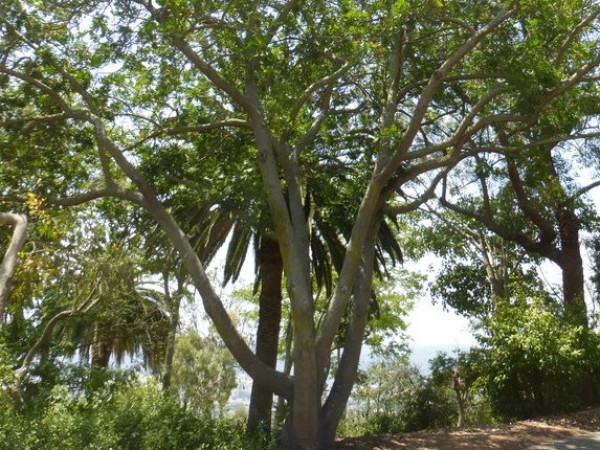
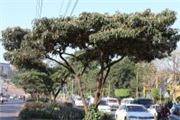
Wild plum is an attractive evergreen tree with a thick crown of somewhat drooping leaves, growing up to 15 meters tall. The bole is up to 60cm in diameter. The main stem is clean and straight, but the forest form often has supporting buttress roots.
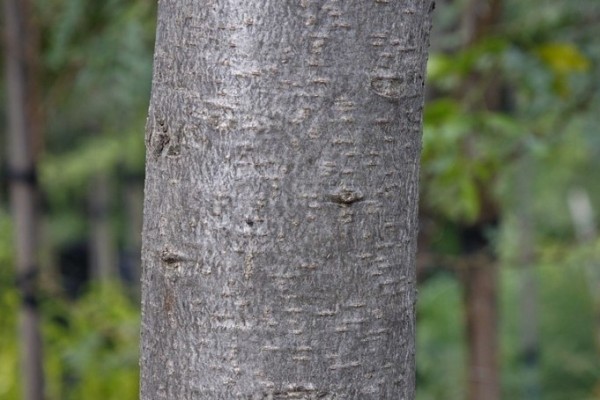
BARK: smooth when young; becoming rough, dark grey-brown as it grows older. Branches are curved bowed upwards, with leaves crowded towards the ends, forming a thick crown at the top of the tree.
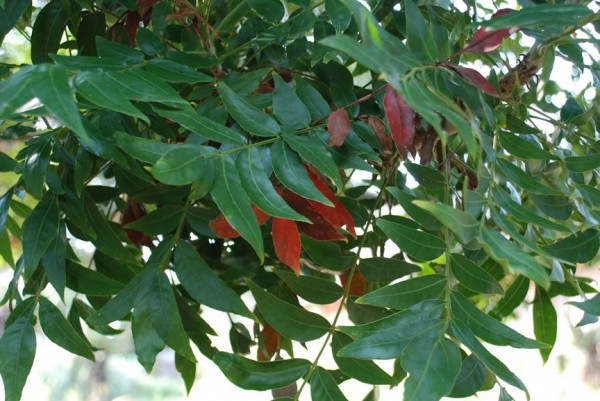
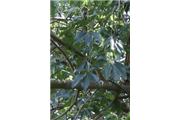
LEAVES: shiny dark green, glossy, pinnate with sickle-shaped leaflets, and are sometimes interspersed with the odd red leaves.
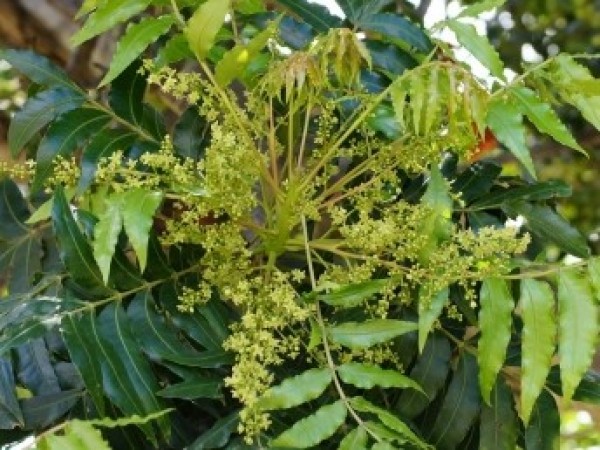
FLOWERS: whitish green, borne near the ends of the branches with male and female flowers on separate trees.
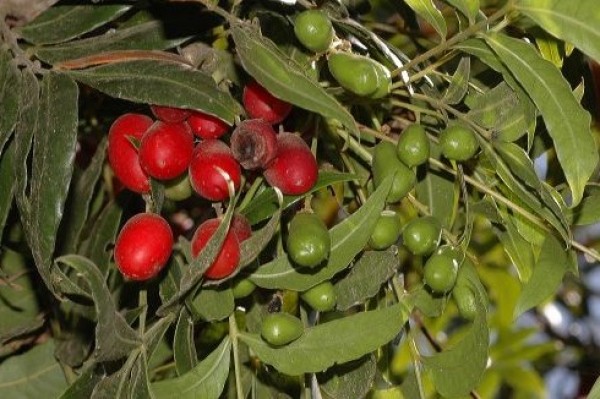
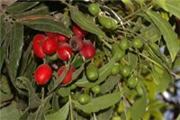
FRUITS: tasty plum-like first appear green and then turn red when they ripen. They contain a single seed.
Uses
Edible: fruit is eaten raw or made into jams, jelly etc.
Medicine: bark, and the root. http://tropical.theferns.info/viewtropical.php id=Harpephyllum+caffrum
A mauve or pink dye is obtained from the bark.
The wood is used as a general purpose timber, for furniture and beams and is also used for carving curios.
An ornamental tree.
Ecology
Wild plum is endemic to southern Africa, with a distribution extending from the Eastern Cape, through KwaZulu-Natal and into Swaziland, southern Mozambique, Mpumalanga and Limpopo. It occurs mainly in coastal forest. It also succeeds in tropical and subtropical climates, and is intolerant of frosts. It's tolerant of a wide range of soils, including poor soils and succeeds in dry soils. The branches are quite brittle and can break off in high winds. In Kampala, Wild plum can be found within Makerere University zone 7 among other places.
Management
It's a reasonably fast-growing evergreen tree. Mulch well and water regularly until the tree has clearly settled in, then reduce the frequency of watering if water is scarce.
Tree gallery