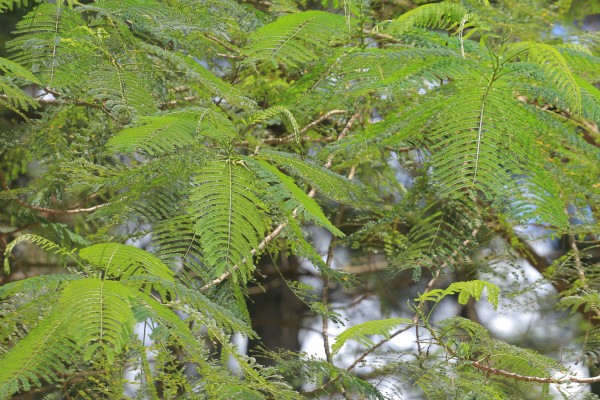
Entada abyssinica
Luganda: Mwolola, musambamazzi Lugishu: Musembe Lugwere: Mukozia Lunyuli: Mujengejenge Luo J: Oberipangala Lusoga: Musambamadhi Rukiga: Kisangi Runyankore: Muyora Sebei: Musiembu.
Description
A small deciduous tree 3-15 m high, with a dense leafy spreading crown and large conspicuous pods often remaining on the tree for a long time.
BARK: grey-brown, rough or smooth, slightly fissured, flaking off in irregular patches; slash pink with streaks of red; branchlets pendulous, glabrous or sometimes pubescent.
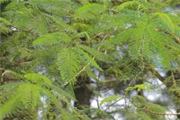
LEAVES: compound, feathery and Acacia-like with 4-22 pairs of pinnae and very many leaflets, each narrow and up to 1 cm long, tip rounded.
FLOWERS: small, creamy-white-yellow, in fluffy spikes up to 14 cm long, sweet scented.
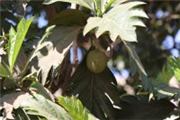
FRUIT: woody pods both long and wide to 39 x 10 cm, almost straight. The central sections, each containing one seed, break away from the woody rim leaving a pod skeleton on the tree. About 10 papery winged seeds.
Uses
Medicine: leaves, roots and bark. http://tropical.theferns.info/viewtropical.php id=Entada+abyssinica
Agroforestry: improves the soil, provides light shade to crops like coffee and tea, fixes nitrogen, leaves are suitable for fodder.
A fiber obtained from the inner bark is used for making bands, ropes, storage bins.
Ashes from the wood are rich in potash and are suitable for soap making.
The wood is often used for fuel.
Provides timber.
An ornamental plant.
It can be used as a live fence. It can also provide fencing materials (dry branches).
Ecology
A small tree which grows from Sierra Leone, Eritrea and Uganda south to Angola, typically found in woodland. In Uganda it grows in wooded grassland, preferring sandy loam soils, 1,300-2,050 m, and is associated with Albizia zygia and A. hockii. In Kampala, Entada abyssinica can be found within Makerere university, along Yusuf Lule among other places.
Management
Fast growing on good sites, pollarding, coppicing.
Tree gallery
.jpg)
.jpg)