Cycas revoluta
Sago palm, king sago, sago cycad, Japanese sago palm
Description
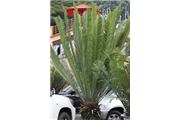
This symmetrical plant supports a crown of shiny, dark green leaves 50 - 150cm long on a thick shaggy trunk that is typically about 20 cm (7.9 in) in diameter, sometimes wider. The trunk is very low to subterranean in young plants, but lengthens above ground with age. It can grow into very old specimens with 6–7 m (over 20 feet) of trunk.
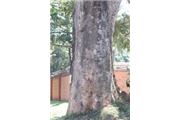
BARK: dark brown and thick, and appears shaggy, trunks can branch several times, thus producing multiple heads of leaves, a thick, soft stem or trunk made up of storage tissue with very little true wood.
LEAVES: deep semi glossy green and about 50–150 cm (20–59 in) long when the plants are of a reproductive age. They grow out into a feather-like rosette to 1 m (3.3 ft.) in diameter. The crowded, stiff, narrow leaflets are 8–18 cm (3.1–7.1 in) long and have strongly recurved or revolute edges. The basal leaflets become more like spines. The petiole or stems of the sago cycad are 6–10 cm (2.4–3.9 in) long and have small protective barbs.
FLOWERS: male and female flowers occur on separate plants. The female inflorescence is feather like, later forming a tightly packed seed head. The male cone is pineapple shaped. Male plants produce something that resembles a yellow pine cone (microsporophyll) up to 2 feet long. The female plant produces a megasporophyll, which is in fact modified leaves.
FRUIT: orange colored oval shaped fruits are protected by a cupper colored light brown furry structure which is formed within the crown of female plants, 1-3 inched in length.
Uses
An ornamental plant.
Medicine: the leaves, the terminal shoot, and seeds. https://www.pfaf.org/user/Plant.aspx LatinName=Cycas+revoluta
Leaves can be used for decorative purposes.
Starch extracted from the pith can be used for making dumplings.
Edible: the heart or pith of the trunk is sliced and eaten baked or powdered. https://www.pfaf.org/user/Plant.aspx LatinName=Cycas+revoluta
It isused for the production of Sago .
Ecology
Cycas revoluta is native to southern Japan including the Ryukyu Islands. It's found mainly on the sea shore in S. Japan, thickets on hillsides on islands, sparse forests on mainland at elevations of 100 - 500 meters in E. China. The plant occurs primarily on steep to precipitous stony sites, but previously they occurred on flatter land which has since been cleared. This plant produces cones and bears attractive, palm-like feathery foliage making it very similar looking to palms, and tree ferns.In Kampala, Sago palm can be found at Upper Kololo terrace among other places.
Management
The plant is very slow growing and requires about 50–100 years to achieve a reasonable height. Pruning can be done anytime to remove dead fronds. The oldest and lowest leaves that have brown tips or turn brown should be removed and cut as close to the trunk as possible. During the active growth period of the plant, it should be watered moderately.
Tree gallery
.jpg)
.jpg)
.jpg)