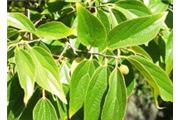
Celtis africana
Camdeboo stinkwood, White stinkwood
Luganda: Akasinsa Lugishu: Gusotono, lusa Lugwe: Musisa Lusoga: Mukyemogola Rukiga: Nyabinunka Runyankore: Muzunzu Rutoro: Nyamumenka Sebei: Mastet, mastitet.
Description
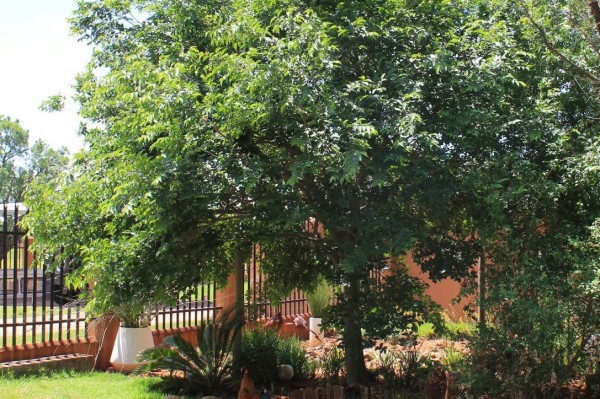
A deciduous forest tree about 12 m but reaching 35 m, with a spreading crown.
BARK: smooth, pale grey often marked with horizontal rings. Young shoots have rust-coloured hairs.
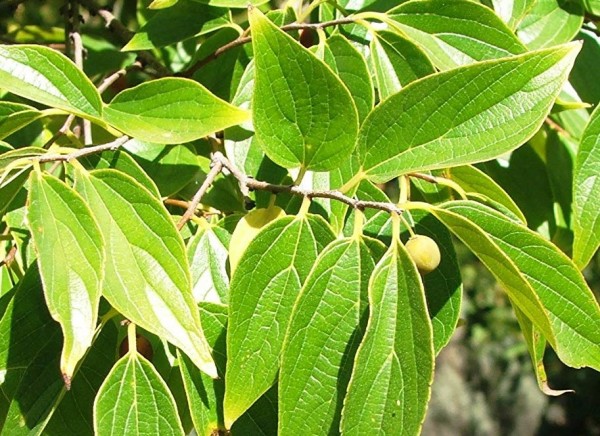
LEAVES: clearly 3-veined from the base of the oval leaves (as in all Celtis), outer 2 veins reaching well into upper half of the leaf, rough and dull green above, hairs on veins below, edge toothed over top two thirds, base a little unequal, tip drawn out and pointed.
FLOWERS: sepals but no petals, very small, greenish, on thin stalks, in clusters beside leaves, female flowers above male flowers on the stalk.
FRUIT: yellow or orange, round and hairy, less than 1 cm on stalks about 2 cm long, hard seeds inside.
Uses
Medicine: bark, the roots, and leaves. http://tropical.theferns.info/viewtropical.php id=Celtis+africana
The fibrous bark is often used for making ropes and cloth.
The wood is used for planks, yokes, triggers, axe handles, laths, fences, cooperage, railway ties etc. It is also used for construction, flooring, joinery, interior trim, mine props, furniture, ladders, toys, novelties, sporting goods, agricultural implements, tool handles, pestles, tent-bows, yokes, wagon-making, spoons, boxes and crates. It is suitable for ship building, railway sleepers, veneer and plywood.
The wood is used for fuel and for charcoal production.
Agroforestry: the leaves provide fodder to the animals.
An ornamental and a shade tree.
Ecology
White stinkwood is indigenous to Uganda. A tree with a very wide range of habitats from dry rocky outcrops to moist evergreen as well as riverine forest. It is common in evergreen lowland forests in all Regions of Uganda, 1,300-2,200 m and is very abundant in the West Bugwe Forests.In Kampala, this tree is found within Uganda Golf Course Club, Makerere University among other places.
Management
Side pruning.
Tree gallery