Caesalpinia decapetala
Mauritius thorn, Mysore thorn, Cats claw, Wait-a-bit
Description
A shrub or climber, occasionally reaching 10 m.
BARK: grey and smooth with prickles.
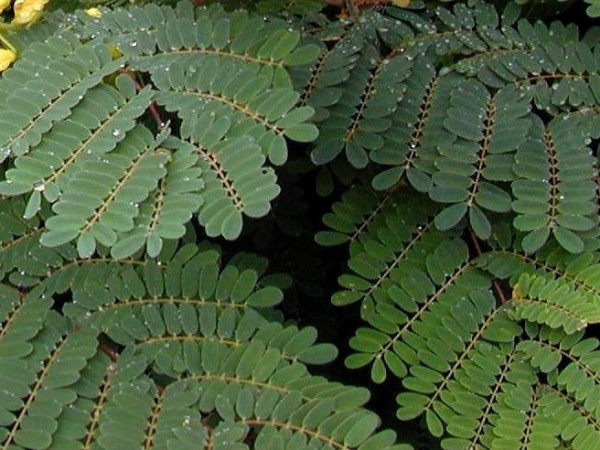
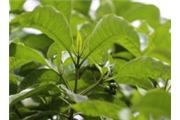
LEAVES: feathery, compound to 50 cm long with hooked prickles along the leaf stalk.
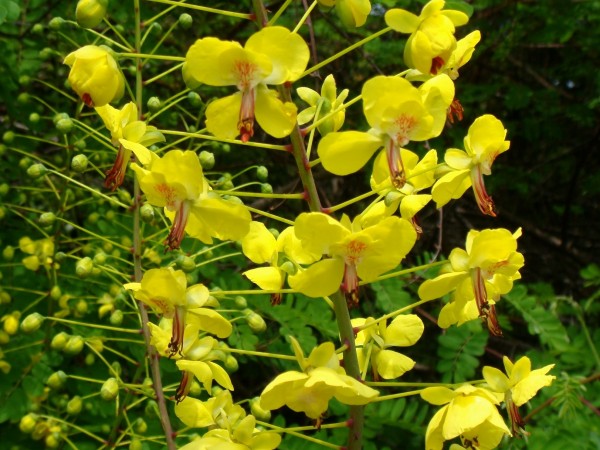
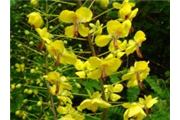
FLOWERS: showy pale yellow in spikes to 30 cm, 2 cm across with orange stamens hanging down.
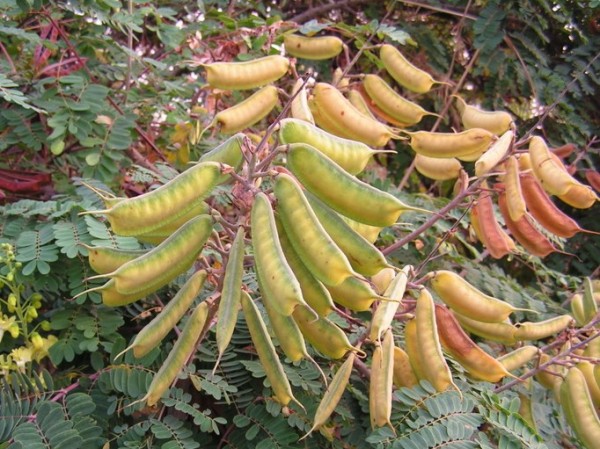
FRUIT: clusters of brown pointed pods, held erect on woody stalks scattering seeds as they open.
Uses
Medicine: leaves, roots, stems, and pods, seeds. http://tropical.theferns.info/viewtropical.php id=Biancaea+decapetala&redir=Caesalpinia+decapetala
An ornamental tree.
Agroforestry: used as a livestock excluding barrier, grown as field boundaries, make an excellent hedge plant, used in soil stabilization project, provides bee forage, leaves can be used as a mulch.
Seeds and roots are used as an insecticide.
The bark is a rich source of tannin.
Seeds are used to make necklaces.
Ecology
Mauritius thorn is native to Tropical Asia. A thorny shrub widely naturalized in Africa in medium- and high rainfall areas, 900-2,100 m. In Uganda commonly cultivated as a live fence or growing wild in most areas except North Eastern Region. In Kampala, Caesalpinia decapetala can be found in Makerere University Zone 1 among other places.
Management
Fairly fast growing; trim as a live fence.
Tree gallery