Vangueria madagascariensis (V. acutiloba)
Spanish tamarind, Common wild medlar
Lugishu: Shikomosi Luo J: Adezo
Description
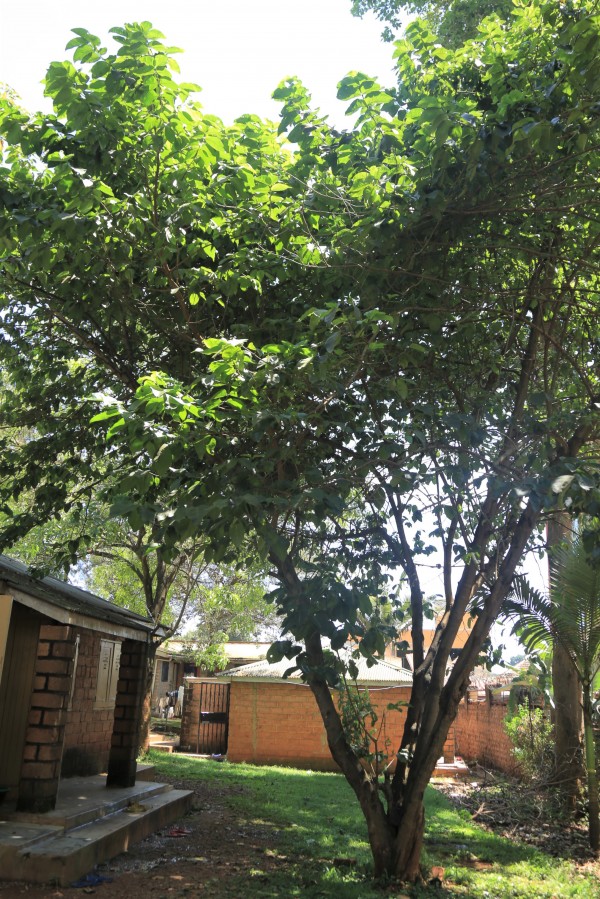
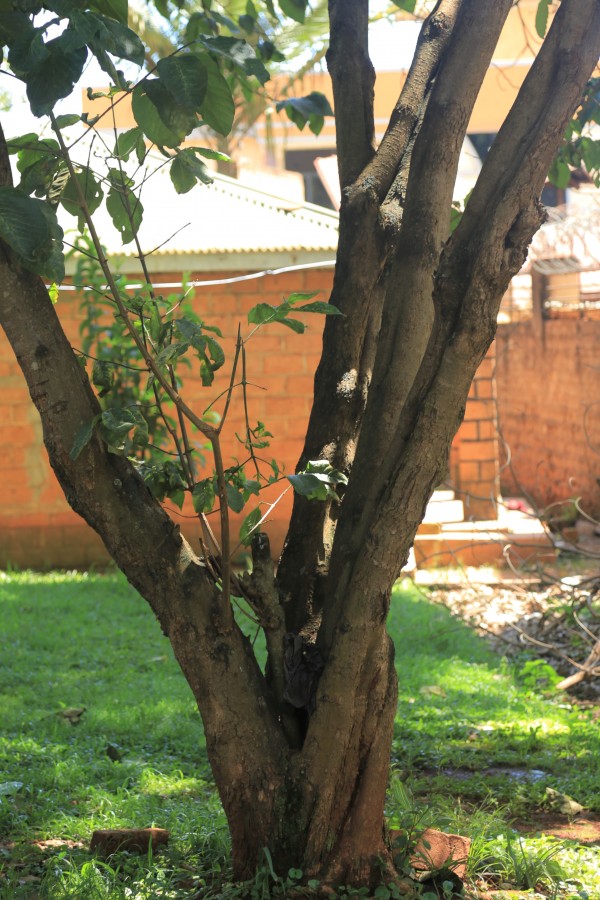
Usually multi-stemmed and deciduous, the tree may reach 15 m.
BARK: pale to dark grey, fairly smooth or ridged.
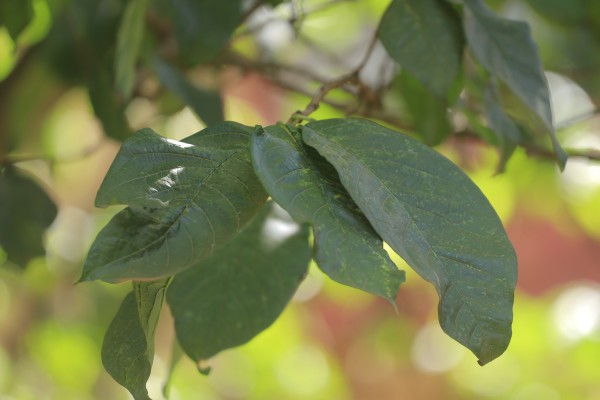
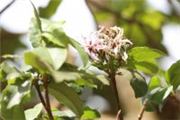
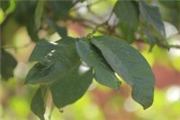
LEAVES: large limp, glossy green, broadly oval to 20 cm, usually smaller, opposite, the margin wavy, veins clear below; older leaves are almost hairless. Leafy stipules on the young shoots.
FLOWERS: small, few in hairy stalked heads, petals green-yellow.
FRUIT: rounded green to 5 cm across often in bunches of 5-6 brown and edible when ripe containing a few hard seeds. Each seed 1.5 cm long.
Uses
Edible: fruit can be eaten raw, and made into drinks. http://tropical.theferns.info/viewtropical.php id=Vangueria+madagascariensis
Medicine: roots, and the bark. http://tropical.theferns.info/viewtropical.php id=Vangueria+madagascariensis
The wood is suitable for building construction, tool handles and carving.
It is popular as a source of both firewood and charcoal.
Agroforestry: used in apiculture (provides bee forage).
Ecology
Vangueria madagascariensis is native to Uganda. A common African wild fruit tree which grows in dry fringing forest, woodland, bushland and grassland with scattered trees throughout East Africa and also West, Central and Southern Africa, India and western Australia, 0-2,130 m. In Kampala, Vangueria madagascariensis can be found along Buganda road.
Management
Coppicing, pollarding.
Tree gallery