Treculia africana
African breadfruit, wild jackfruit
Luganda: Muzinda.
Description
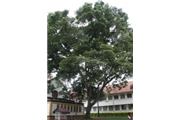
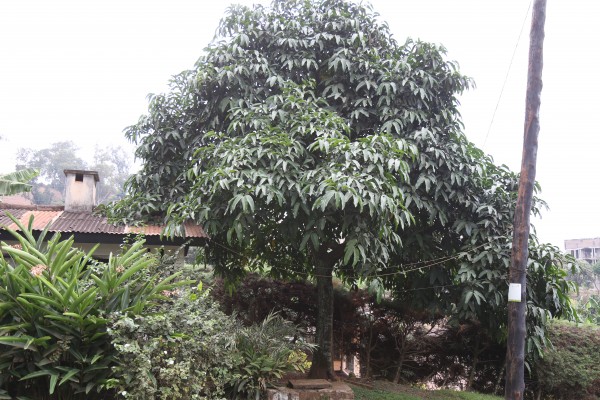
An evergreen tree 15-30 m, up to 50 m, with a dense spreading crown and a fluted trunk. It can attain a diameter of 90 cm.
BARK: grey, smooth, thick, exuding white latex when cut, which later turns rusty-red.
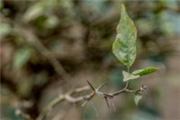
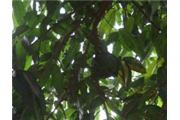
LEAVES: simple, alternate, very large, about 30 x 14 cm (up to 50 x 20 cm), dark green, smooth above, tough, paler below with some hairs on the 10-18 pairs of clear veins, tip pointed, a short stalk to 1.5 cm. Young leaves red or yellow.
F LOWERS: flower head brown-yellow, rounded, 2.5-10.0 cm across, male and female usually separate, growing beside leaves (axillary) or on older wood down to the trunk.
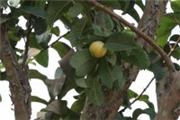
FRUIT: compound, rounded, very large, up to 30 cm across, on the trunk or main branches, containing many orange seeds, about 1 cm, buried in spongy pulp of the fruit. The outer surface is covered with rough pointed outgrowths.
Uses
Edible: seeds can be eaten as dessert nuts after roasting or boiling, ground into a meal, used in soups and to produce a variety of baked foods such as bread and paste, a non-alcoholic beverage (almond milk) can be prepared from the powdered seeds, edible oil can be extracted from the seed. http://tropical.theferns.info/viewtropical.php id=Treculia+africana
Medicine: roots, sap, and bark. http://tropical.theferns.info/viewtropical.php id=Treculia+africana
Agroforestry: used in soil conservation programs, leaf fall is a good source of mulch, promising species for use in home gardens, and for intercropping systems, provides fodder
Provides timber which is suitable for furniture, carving, turnery and inlay wood, pulp and papermaking.
The wood is used for fuel and making charcoal.
An ornamental tree.
Ecology
African breadfruit is from tropical Africa, from Senegal to Angola and Mozambique. A fruit tree of riverine forest in tropical Africa, Madagascar and Tanzania, 0-1,200 m. A rare species in Uganda, it is usually found near streams or in swampy areas in forests up to 1,500 m. It is not very light demanding and will grow in a wide variety of soils and climatic conditions. In Kampala, this tree species can be found within Kitante courts.
Management
Fairly fast growing. Pollarding and coppicing
Tree gallery
.jpg)
.jpg)
.jpg)
.jpg)